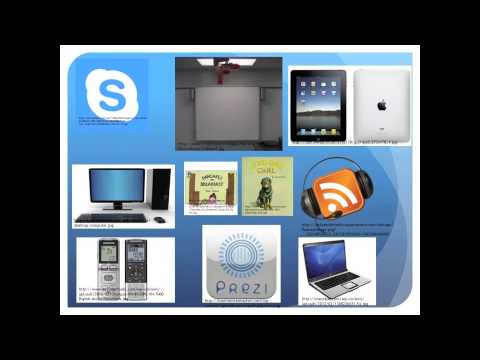
The difficulties and Challenges of Teachers’ IntegratingComputer Assisted Instruction into Teaching

(reference: http://supawadeemooann.blogspot.com/)
1.ABSTRACT
This project aims to investigate and discuss the
effect of teacher’ integrating computer-assisted
instruction (CAI) and multimedia into
teaching.
However, how to use instructional technology to
practice English teaching successfully and efficiently is not an easy task. The instructors should understand the development of CALL, the
trends of instructional technology, and principles applied in technology. In the study, during the process of teaching in the computer-assisted environment, the teacher encountered numerous
difficulties and challenges from students' presentation, and assignments.
2.INTRODUCTION
With the change of times and rapid development in
technology, computer assisted language learning has become a trend in resent
years. Multiple multimedia has connected the new
technology education.
Recently, teachers' teaching task is growing more
and more different from that of the traditional teaching. Teachers
are not only instructors but also assistants to students' learning. Now teachers should try to inspire students' potentials, and
give them chance of creative and critical thinking. The
role of instructors in this modern environment of CALL has become active,
creative and innovative.
Every teacher should have e-learning
perception, computer technology training and then the teacher will face new
challenges to adopt new appropriate instructional strategies and to facilitate
student's learning. It is teachers' duty of how to put CAI
into practice that can bear the fruit of teaching and learning. Therefore,
how to apply computer assisted instruction into educational technology
efficiently and effectively is English language teachers’ main
task (Wei, 2005).
3.LITERATURE REVIEW
The Brief History of Computer Assisted
Language Learning
In recent years, computers have
become so widespread in schools and homes that their uses have to be re-examined. The development of CALL is
divided into three main phases, behaviorist CALL, communicative CALL, and
integrative CALL.
Behaviorist CALL was the first
phase of computer assisted language learning implemented in the 1960 and 1970s. The programs of this phase were based on then main behaviorist
theories of learning. Drill and practice courseware was
based on the model of computer as tutor (Taylor, 1980). A number of CALL tutoring systems were developed in the era of
the mainframe and the best-known tutorial system PLATO.
Communicative CALL based on the communicative teaching approaches promoted communicative
competence and real communication. It
appeared and became outstanding in the 1970s and early
1980s (Underwood, 1984). Besides
using computer as a tutor, computer should play the role of a stimulus and a
tool (Taylor, 1980). The former role
adopted communicative activities to encourage learners. And
the latter role enabled students to understand and use the language through
word processing, spelling and grammar checking desktop publishing programs (Warschauer, 1998).
Integrative CALL emerged in the
late 1980s and early 1990s based on multimedia computers and the Internet was
aimed to integrate the four skills (listening, speaking,
writing and reading) as well as technology in the language
learning process (Warschauer & Healey, 1998). For language students, they could involve themselves in their
learning in a more authentic learning environment by interesting all language
skills. It is thus not surprising the EFL will have get on
the stage of CALL in the future development.
4.Multimedia in the CALL Classroom
Multimedia as a class of computer-driven
interactive communication systems which create, store, transmit, and retrieve
textual, graphic, and auditory networks of information. Today’s multimedia is integrated into the CALL classroom. Multimedia allows a variety of media such a texts, graphics,
sound, animations, videos, and creates various integrative language
environments. The students can obtain the multimedia
resources and navigate their own path simply by pointing and clicking the mouse
5.The Significance and Trends of Instructional Technology
Instructional technology has been defined as "applying scientific knowledge about human learning to the
practical tasks of teaching and learning" (Albion,
2001). Technology is certainly a part of the landscape of
society many people conclude that technology logically should also play a key
role in education. Educational technology is especially
important because teachers are eager to help students reach high-level,
worthwhile objectives, in the context of limited time and resources. Along with technology and systematical design, teachers can
make the instruction more individualized, valid, accessible and economical (Wang, 2000).
So, instructors are to design CALL lessons and seek
appropriate media based on students need. Furthermore,
instructors are supposed to evaluate whether or not the instructional materials
are suitable for. Then computer assisted instruction (CAI) is an efficient way to solve the
instruction problems.
6.The Principles and Factors are Applied in Technology
The common
rationale for using technology is based on two major points. According
to societal inevitability theory, technology is everywhere. And
researches have been shown that using the computer is efficient on education.
Applying computer technology makes
teachers have rich productivity, teaching effect, and change students learning
styles, which can make the relationship of interaction and connection between
teachers and students closely.
7.The Study
During the speaking and listening course in CALL
environment, the teacher set up E-learning campus. Students had to post their assignments, watching other groups'
report to give their opinions and to correct each other's assignment, using e-mail, bulletin board and chat room to exchange to obtain much
more resource. Several items were noticed:
1. Four or
five students formed a group in cooperative learning.
2. The
teacher gave the students a specific topic "A trip to
a historic attraction and scenic place", playing the
CD Rom to motivate learning.
3. The
teacher explained to students how to search resources, connect related web-site, and showed students to do procedure according to the task
assigned
4. Each
member in the group was responsible for his own work then group discussed the
assignment together and brain stormed with each other to integrate their
opinions to solve their difficulties.
5. After
discussing, each group took a picture and video, modified the scripts and added
music effect prepare for their performance.
6. The
students visited traveler interviewed the employers of the stores, collected information
and recorded the viewpoint.
7. Each week
the group students posted their report and the group revised the report each
other e-learning campus.
8. The group
students’ presented their product by video and power point.
9. The
teacher and students examined together.
8.DIFFICULTIES OF APPLYING COMPUTER ASSISTED INSTRUCTION TO TEACHING
Applying the computer technology in English class
is so complicated and important that we don't ignore it, but nowadays using CAI
strategies is still not pervasive. Several difficulties
and challenges need be solved; several conditions have room to be desired. The researcher analyzes as follows:
Facilities of the School and
Classroom
the computer classroom difficult
to use, and the administrator and the programmer had not enough time to aid
teachers in time. And mechanics were necessaries to
maintain and remedy computers
Related Administrators Emphasis
The biggest problem was lack of
the principle’s and the administrator's sufficient support. So teaching practice in CALL was not easy to set into action.
Teachers' Teaching Beliefs and Styles
Teachers' aptitude and beliefs
play an important part. Whether teachers decide to apply
computer technology depends on their beliefs. So the
teachers' attitude and beliefs influence teaching and learning effect of the
students (Fang, 1996)
Teachers' Computer Competence
In the course of the process of
teaching, teachers act as facilitators, designers, guides and assistants (Warschauer, 1998). So teachers' technology
competence should be enhanced. If the teachers are lack of
competence, such as computer multimedia contents presented, systematic teaching
models applied and multimedia sources utilized, it is impossible for the
teachers to integrate technology into teaching efficiently (Wei,2005).
Teachers’ Heavy
Burden
The teacher posted important
information on the bulletin board and reminded the students assignments and
test scores. The teacher always spent much time to deal
with the computer shutdown and contacted mechanics and programmers to repair
the computer right away.
Students’ Computer
Competence
The teacher always found that a
lot of information students collected was copied, and posted. To
raise learning effect, enhancing students’ computer
competence was urgent (Chien,2004).
8.THE SOLUTION THE PROBLEMS OF APPLYING COMPUTER ASSISTED INSTRUCTION TO TEACHING
Computer Facilities and Administrators'
Emphasis
Adequate computer facilities can
facilitate teachers to use computer techniques and increase the opportunities
of teachers' applying technology to teaching.
Build up Teachers' Concept and Teaching
Beliefs
As long as teachers to are willing
to attempt to do it they will gain a lot of appropriate strategies of
technology teaching. Teachers' patience and perseverance
are necessary ; through such perseverance they can be able to elicit students'
potential ability in this computer instructional method.
Improve Teachers' and Students'
Computer Competence
When technology applied to
classroom instruction, teachers have to be familiar with the operation of the
computer.
Reduce Teachers' Workload
To reduce teachers' burden and to
enhance the effects of teaching. teachers should train
students as group leaders to aid them in their courses. In
addition, teachers should have contact with computer programmer closes and then
teachers with programmer and group leaders could maintain the operation and
management of computer together.
In the age of integrating
technology into teaching, the teachers' task is both difficult and
challengeable, so teachers must take participate in related seminars,
conferences activities and practical lessons to seek for professional members
to solve difficult problems. Regular evaluations,
strategies revised any time are necessary for teachers to find the most
appropriate and efficient methods to help students reach the best learning
outcomes.
9.Conclusion
This process of applying new technology in English
teaching is a challenge every English teacher will have to face. Applying
computer assisted language learning to teaching has become a new trend to the
advanced countries in the current world. Meanwhile,
information technology and multimedia teaching will be a direction that the
government advocates in our educational policy. Whether
there integration between technology and English teaching efficiently and
successfully depends on the teachers' efforts and professional abilities. More importantly, the government and education authorities
concerned should emphasis on the need of information technology in schools,
fostering the coordination of policy and resources. Although
the integration of technology into English is difficult and complicated, it is
suggested that teachers can build up confidence, and consult with the
professional teachers to continue innovation. It hoped
that the difficulties the teacher has faced in the study can serve as the
future reference for improving language learning strategies in college English
teachers.